
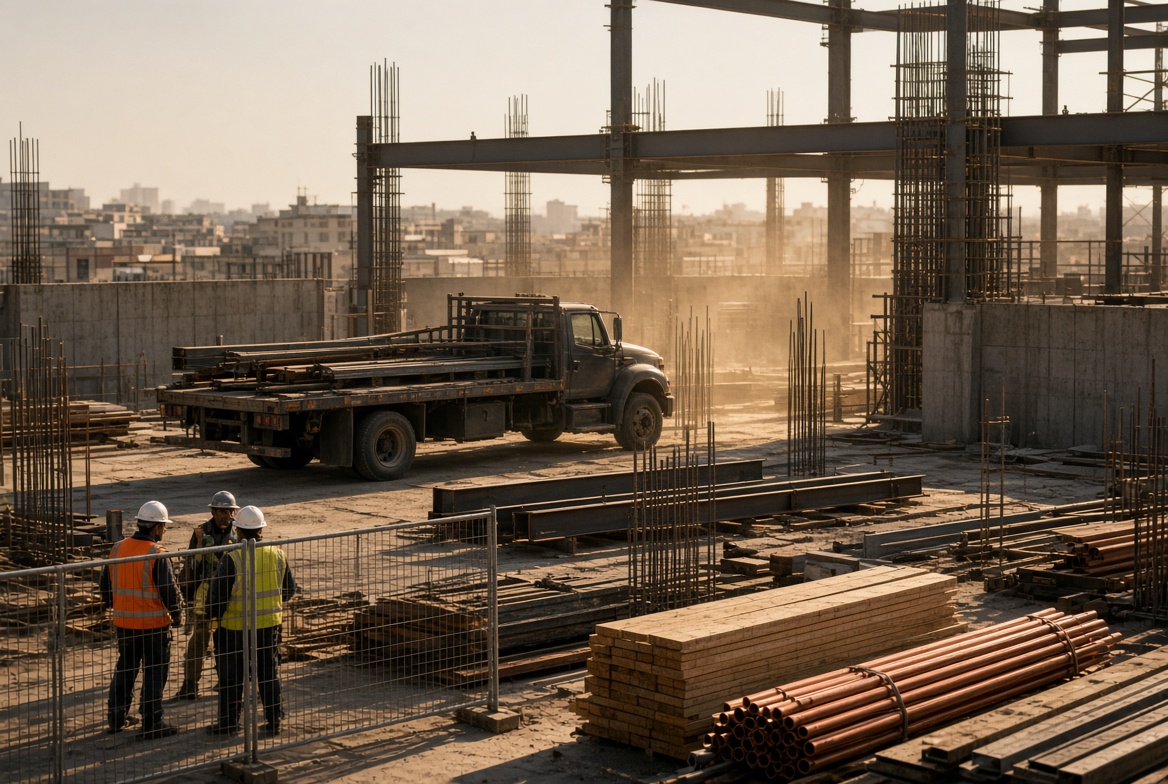
Tariffs reset input costs mid-project while your cash is locked in retainage.
Construction working capital helps contractors cover materials and payroll while draws and retainage are pending — terms vary by provider, and approval is not a promise. You bid the job, the bid looked healthy, and then steel jumped again. For contractors in 2026, tariffs have turned secure-looking margins into break-even work halfway through a project — and your money is locked up in draws and retainage while the material invoices come due now. Bridging that gap without putting up a project as collateral is where alternative funding earns its keep.
Tariffs are resetting your input costs mid-project
Sources: Associated Builders and Contractors (PPI analysis, 2026); Construction Dive (Feb 2026).
The problem isn’t just that costs are higher — it’s that they move after you’ve signed. On fixed-price contracts, even a modest jump in materials can erode the margin you bid on. Shifting tariff policy is the kind of swing that can ripple straight into your buyout pricing.
The cash-flow trap: draws, retainage, and stockpiling
Two forces drain your working capital at once. First, the draw and retainage cycle means you’ve done the work but a chunk of the money is held back for weeks or months. Second, the common defense against tariff spikes — stockpiling materials before prices climb — shifts cash out the door early and raises your working-capital needs precisely when you can least spare it.
Where alternative funding fits
Banks are slow and, per the Federal Reserve’s own surveys, still tightening on small-business credit — and bank underwriting got stricter in 2026, with more documentation and verification before approval. Revenue-based working capital takes a different read: it looks at your monthly deposits. If jobs are billing and money is cycling through your account, that revenue can fund the gap between buying materials and collecting on the draw — without tying up a project as collateral.

Common questions
Can I get funding while waiting on draws or retainage?
Yes. The lag between completing work and collecting on draws or retainage is one of the most common reasons contractors seek working capital. Revenue-based funding bridges that gap using your monthly deposits.
How do tariffs and rising material costs affect my options?
Higher material costs are a major reason contractors seek working capital, especially when prices rise after a fixed-price bid. Funding can cover material purchases and stockpiling so a tariff spike doesn’t stall your project.
Do I need to put up a project or property as collateral?
Revenue-based working capital is based primarily on your business deposits rather than pledging a specific project. Checking your path on Fundseta does not involve a hard credit pull.
What if a bank already turned me down?
Bank denials are common in construction given lumpy cash flow. Because revenue-based options weigh your deposits, strong billing activity may open a path even after a bank says no.