
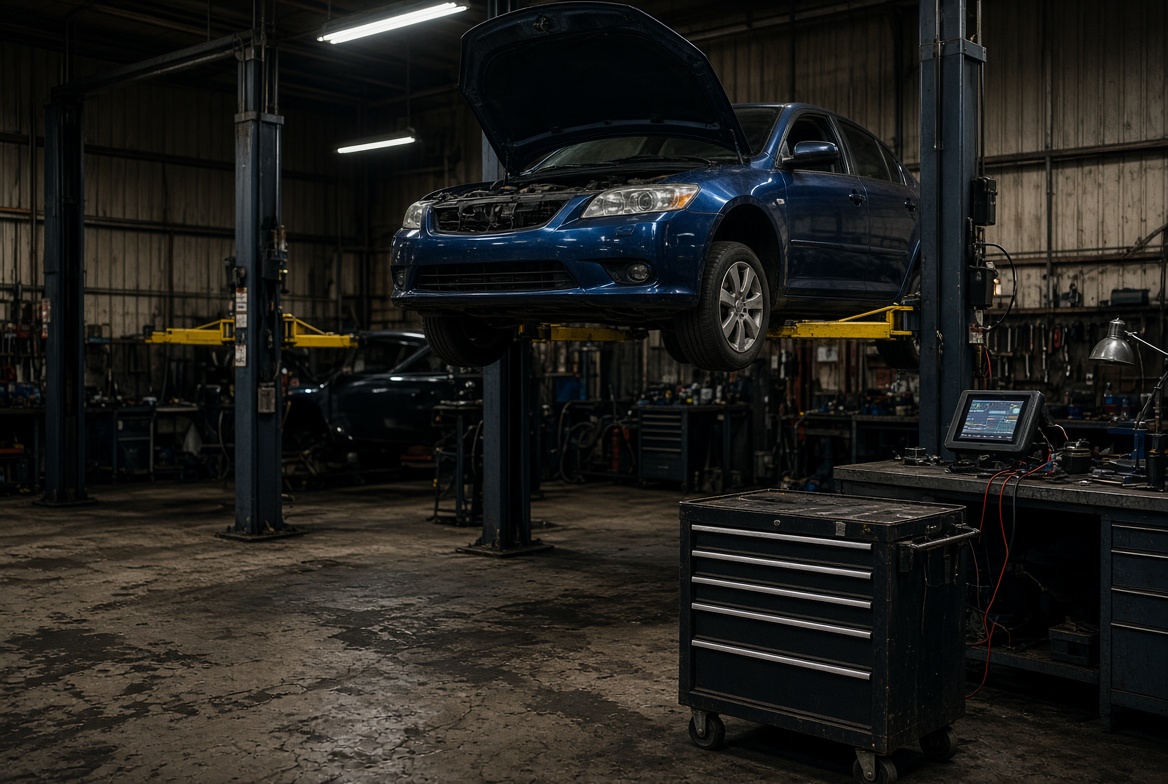
Parts, technician payroll, and shop rent do not wait on a warranty review.
Auto repair shop funding provides working capital for parts, equipment, and technician payroll while warranty claims and fleet accounts pay late — terms vary by provider, and approval is not a promise. Run a repair shop, body shop, or service center and you already know the rhythm: cars come in, work gets done, and then you wait. Warranty claims get reviewed line by line before they pay. Fleet and commercial accounts often run on 30-to-60-day terms. Meanwhile your parts supplier, your techs, and your landlord all want to get paid on a schedule that has nothing to do with any of that. That timing mismatch isn’t a sign your shop isn’t profitable — it’s a cash-flow problem, and it’s exactly the kind of gap alternative funding is built to close.
The parts-and-payroll squeeze
Independent shops typically run thinner cash reserves than dealership service departments, which makes the wait on warranty and extended-service-contract reimbursements especially painful. Add in a slow month, a broken lift, or a tech who needs new diagnostic equipment to handle newer vehicles, and the cash crunch compounds fast.
Source: Fundseta industry research, alternative funding for auto repair and service businesses (2026).
Why fleet and warranty pay cycles hit hardest
A retail customer usually pays at pickup. A fleet account or a warranty claim doesn’t. That single difference is often what separates a shop with breathing room from one that’s constantly juggling which bill to pay first. Shops that lean into commercial and warranty work — often the more profitable jobs — can end up with the tightest cash flow precisely because that work pays the slowest.
Where revenue-based funding fits
Banks look backward at credit history and collateral, and they’re slow even when they say yes — the Federal Reserve’s own surveys show banks, on net, still tightening on small-business lending. Revenue-based working capital looks at something different: your monthly deposits. If cars are coming through the bay and money is landing in your account on a regular cycle, that revenue may open a path even if your credit isn’t pristine and even if a bank already said no.
That’s the bridge — turning next month’s ticket volume into this week’s working capital so you can stock parts, keep payroll on time, and take on the fleet and warranty work instead of turning it away because you can’t float the wait.
Common questions
Can I get funding while I'm waiting on a warranty or fleet account to pay?
Yes. Slow-paying warranty claims and fleet accounts are one of the most common reasons shop owners look for working capital. Revenue-based funding looks at your monthly deposits, so steady ticket volume may open a path to bridge the gap while you wait to get paid.
Do I need to buy a big parts or equipment order to qualify?
No. Qualification is based on your business deposits, not on a specific purchase. Many shop owners use working capital to stock parts and upgrade diagnostic equipment ahead of demand, then repay it out of ongoing revenue.
Do I need great credit to get shop financing?
Not necessarily. Revenue-based options weigh your monthly deposits more heavily than credit alone, which is why shop owners turned down by a bank can still qualify. Checking your path on Fundseta does not involve a hard credit pull.
How fast can funding reach my account?
Timelines vary by program and provider, but many revenue-based options can move from approval to funded in a matter of days (not a promise).